Small business bitcoin ATM installation requires FinCEN registration as a Money Services Business, state-specific licensing that varies by location, and total costs that can vary widely and may reach $10,000-$35,000+ depending on state licensing requirements. Some operators report achieving profitability within 12-18 months, though this varies greatly by location, costs, and market conditions.
Installing a Bitcoin ATM can transform your small business into a cryptocurrency hub while generating additional revenue. As digital currency adoption accelerates, Bitcoin ATMs have become valuable infrastructure for cash-to-crypto transactions. The small business bitcoin ATM installation process involves navigating federal and state regulations, selecting appropriate equipment, and establishing profitable operations.
This comprehensive guide walks you through every step of the installation process, from compliance requirements to achieving profitability. Whether you’re a convenience store owner, a gas station operator, or a retail business looking to diversify revenue streams, this guide provides the roadmap for a successful Bitcoin ATM installation.
Understanding Bitcoin ATM Installation Requirements
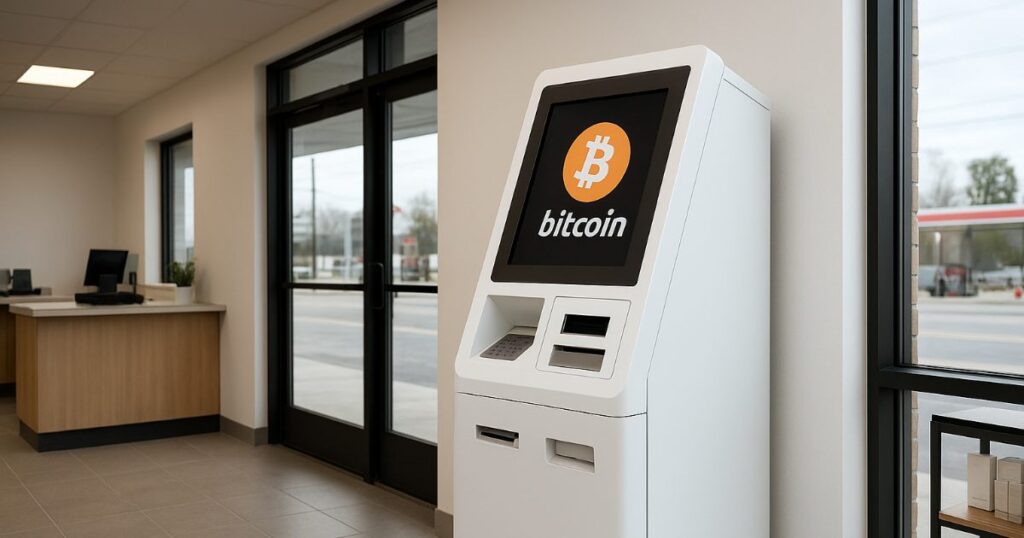
Bitcoin ATMs allow customers to exchange cash for digital currencies, including Bitcoin, Ethereum, and Litecoin. One-way machines support only cryptocurrency purchases and typically cost about $6,000-$10,000. Two-way machines allow both purchases and sales, generating higher revenue potential at about $11,000-$15,000+.
The installation process is subject to complex federal and state regulations. Unlike traditional ATMs, cryptocurrency ATMs require Money Services Business registration and comprehensive anti-money laundering programs. Your business model significantly affects requirements, from self-owned operations with maximum control to revenue-sharing partnerships with reduced complexity.
Step 1: Navigate Regulatory Compliance
Regulatory compliance forms the foundation of successful installation. The landscape involves federal requirements and varying state obligations.
Federal Requirements
FinCEN Registration requires every Bitcoin ATM operator to register as a Money Services Business through FinCEN’s online platform. Registration triggers Bank Secrecy Act obligations, including written anti-money laundering programs, Know Your Customer procedures, detailed recordkeeping, and Suspicious Activity Reports.
AML/KYC Programs require systematic customer verification and transaction monitoring. Modern compliance may involve blockchain analytics software that monitors addresses for high-risk indicators, though these tools are optional and not mandated by FinCEN.
State Requirements
State regulations create the most complex compliance aspect. Bond requirements and licensing rules vary by state, with some requiring money transmitter licenses while others do not.
Money Transmitter Licensing varies dramatically by state. Some, like Montana and South Carolina, have minimal requirements, while others mandate full licensing with detailed applications, background checks, and financial stability demonstrations.
Surety Bond Requirements protect consumers and vary by state regulations. Recent changes, such as Oklahoma’s Senate Bill 1083, require $500,000 bonds with penalties of $600-$2,000 per violation, underscoring the importance of proper compliance planning.
Step 2: Choose Your ATM Provider and Equipment
Equipment selection impacts installation success through reliability, compliance features, and the quality of ongoing support.
GENERAL BYTES leads globally with over 18,000 deployed ATMs across 60+ countries. They offer BATMTwoPro for one-way operations and BATMThree/BATMFour for two-way transactions, supporting multiple cryptocurrencies with built-in compliance features.
ChainBytes positions itself as the top veteran-owned US provider, emphasizing 30-day deployment using GenMega hardware with comprehensive operational support.
Bitcovault focuses on compliance-ready hardware for US operators, with machines ranging from $ 6,000 to $15,000+ and an emphasis on ease of installation.
Most successful operators invest between $10,000 and $15,000+ per unit, including installation and setup. Premium machines with cash recyclers may achieve faster profitability by reducing operational overhead and increasing transaction capacity.
Step 3: Understand Installation Costs
Small-business bitcoin ATM installations involve upfront capital and ongoing operational expenses, affecting profitability timelines.
Cost Breakdown
| Cost Category | Range | Notes |
|---|---|---|
| Machine Purchase | $6,000-$15,000+ | One-way vs two-way machines |
| Installation & Setup | $500-$1,500 | Often included in vendor packages |
| Licensing Fees | $1,000-$10,000 | Varies by state requirements |
| Surety Bonds | Varies | Bond amounts vary by state (premiums ~1-3% annually) |
| Compliance Setup | $2,000-$5,000 | Legal consultation, AML program |
Monthly Operating Expenses vary significantly based on cash handling, rent, compliance, and location factors, including:
- Cash logistics and armored car services
- Location rent or revenue-sharing arrangements
- Compliance software and monitoring tools
- Maintenance, utilities, and insurance
Total costs can vary widely and may reach $10,000-$35,000+, depending on state licensing and compliance requirements, with monthly expenses creating the baseline that transaction revenues must exceed for profitability.
Step 4: Secure the Right Location
Location selection is the most crucial factor in the success of an installation. High-quality locations can generate sufficient transaction volume to achieve profitability.
Gas stations and convenience stores rank among the most successful locations due to consistent customer flow and cash transaction patterns. These benefit from 24/7 accessibility and attract both regulars and travelers.
Shopping centers provide diverse demographics with cryptocurrency interests. Transit hubs like airports can generate substantial volumes of traffic from tourists and travelers, though at premium rental rates.
Location Assessment requires evaluating foot traffic quality, not just quantity. High traffic without cryptocurrency interest may not generate sufficient volumes. Consider the competitive landscape, infrastructure requirements, and opportunities for negotiation through revenue-sharing arrangements.
Develop relationships with multiple potential locations simultaneously to leverage negotiation leverage and accelerate deployment alternatives.
Step 5: Set Up Operations
Operational setup transforms equipment and licensing into functioning revenue generation.
Banking Requirements include establishing accounts with cryptocurrency-friendly banks experienced with money services businesses. Configure secure Bitcoin wallets with hot wallets for transactions and cold storage for reserves.
Compliance Integration typically involves partnering with specialized providers handling FinCEN maintenance, transaction monitoring, and regulatory updates.
ATM Management Platforms enable remote monitoring and configuration, providing real-time transaction data, cash level monitoring, and security alerts. Configure third-party integrations with exchanges, verification services, and payment processors.
Proper setup requires 2-4 weeks after equipment installation, depending on banking approvals and compliance configuration.
Understanding Profitability and Timeline
Profitability depends on transaction volumes, fee structures, operational efficiency, and the quality of the location.
Transaction fees typically range from 8% to 20%, depending on competition and location, and generate primary revenue through surcharges. Premium locations may support higher fees while competitive markets require modest pricing.
Business models include self-owned operations (maximum revenue and control), franchise models (shared revenue with franchisor support), and host partnerships (limited revenue but reduced operational responsibility).
Some operators report achieving profitability within 12-18 months for well-positioned installations, though this varies significantly by location and costs. Profit varies widely depending on fees, traffic, and operating costs.
Risk Management and Compliance Best Practices
Effective risk management protects against regulatory penalties and operational disruptions.
Regulatory Compliance requires maintaining current FinCEN registration, implementing effective AML programs, and staying up to date with evolving requirements. FinCEN’s August 2025 guidance emphasized oversight of cryptocurrency kiosks, underscoring the importance of robust compliance.
Security Protocols protect against physical and digital threats through adequate surveillance, secure wallet management, regular cash collection, and emergency procedures.
Insurance Coverage should address general liability, equipment protection, cybersecurity, and compliance-related legal costs through insurers experienced with cryptocurrency business risks.
Implementation Timeline and Next Steps
Small business bitcoin ATM installation follows a structured timeline:
Months 1-2: Regulatory research, FinCEN registration, licensing applications, banking establishment, and location prospecting.
Month 3: Equipment selection, compliance program development, location negotiations, and staff training.
Month 4: Installation coordination, management platform configuration, compliance testing, and permit completion.
Month 5: Operational launch, performance monitoring, and optimization planning.
Operators emphasizing rapid deployment typically focus on jurisdictions with minimal licensing requirements. First-time operators should expect 4-6 months for a comprehensive setup in most markets.
For business owners interested in partnership opportunities rather than self-installation, consider exploring how to host a Bitcoin ATM at your business through established operators who handle compliance and operations. You can also review the benefits of installing a Bitcoin ATM at your company to understand the revenue potential and competitive advantages.
Frequently Asked Questions
Do I need special licenses beyond FinCEN registration?
Most states have specific requirements that vary from simple notifications to comprehensive money transmitter licensing with substantial surety bonds. Research your particular state early, as licensing can take months.
What’s the minimum investment needed?
Total costs can vary widely and may reach $10,000-$35,000+, depending on state licensing requirements, equipment selection, and compliance setup, plus working capital for operations.
How long to become profitable?
Some operators report achieving profitability within 12-18 months, though this varies significantly by location, costs, and market conditions. High-quality locations with substantial traffic may reach profitability faster.
What are the most significant operational challenges?
Cash management represents the primary challenge, requiring secure collection and adequate working capital. Regulatory compliance creates ongoing administrative requirements affecting operations.
Can I operate part-time?
While possible, successful operations require regular attention to cash management, compliance monitoring, and customer service. Part-time operators often partner with location hosts for day-to-day management.
Key Takeaways
- Regulatory compliance requires FinCEN MSB registration and state-specific licensing, which vary dramatically by location.
- Location quality drives profitability more than equipment selection, with high-traffic venues offering greater revenue potential.
- Total costs can vary widely and may reach $10,000-$35,000+ depending on state licensing and compliance requirements.
- Some operators report profitability within 12-18 months for well-positioned installations, though this varies widely depending on multiple factors.
- Ongoing compliance and risk management require continuous attention as regulatory requirements evolve.
Ready to explore Bitcoin ATM opportunities for your business? The cryptocurrency market continues expanding, creating potential for prepared small business owners who understand the installation process and compliance requirements. Contact our team to discuss your specific market situation and explore customized solutions.

