Key Takeaway:
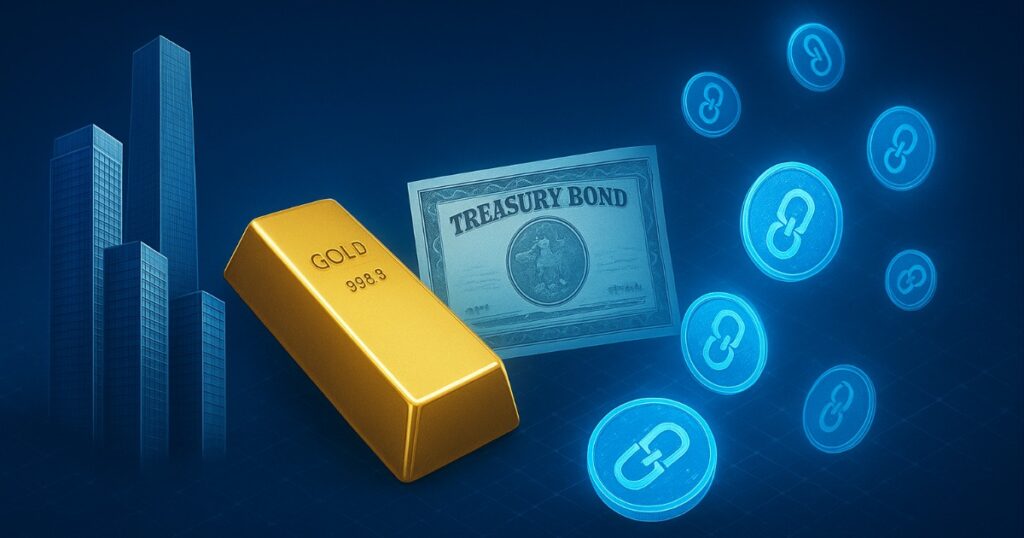
Real-world asset tokenization converts physical assets like real estate, gold, and bonds into blockchain-based digital tokens, enabling fractional ownership and global investment access. Estimates suggest the tokenization market could surpass $8–10 billion by 2024, with forecasts ranging from $2 trillion to as high as $30 trillion by 2030 depending on adoption.
The investment world is undergoing a digital transformation, opening doors previously reserved for wealthy institutions. RWA tokenization has experienced triple-digit percentage growth in recent years, reaching an estimated $8–10 billion by late 2024. This technology makes expensive investments like Manhattan real estate or treasury bonds accessible to everyday investors through fractional digital ownership.
Real-world asset tokenization represents the bridge between traditional finance and blockchain technology. Instead of needing millions to buy commercial property, you can now own a fraction through digital tokens. This article explains how tokenization works, what assets you can invest in, and how cryptocurrency is crucial in accessing these opportunities.
What Is Real-World Asset Tokenization?
Real-world asset tokenization is the process of creating digital tokens on a blockchain that represent ownership of physical or traditional financial assets. These tokens act like digital certificates proving you own a piece of something valuable in the real world.
Think of it like owning shares in a company, but instead of owning part of a business, you own part of a building, gold bar, or government bond. The key difference is that your ownership is recorded on a blockchain rather than traditional paper records or databases.
The process works by dividing an asset worth $1 million into thousands or millions of digital tokens. Each token represents a small fraction of that asset. If a building is tokenized into 100,000 tokens, buying 100 tokens means you own 0.1% of that property.
Tokenization creates new possibilities for traditionally difficult-to-divide or trade assets. Real estate, which typically requires large lump-sum purchases and lengthy sale processes, can potentially increase liquidity through tokenization, though secondary markets remain thin compared to stocks.
How Asset Tokenization Works
The tokenization process starts with a real-world asset owner deciding to convert their asset into digital tokens. This could be a real estate developer, government entity, or company with valuable assets.
First, the asset undergoes legal structuring. Lawyers create special-purpose vehicles or trusts that legally hold the asset. This ensures token holders have legitimate ownership rights that courts will recognize.
Next, blockchain developers create smart contracts that define the token’s properties. These contracts specify how many tokens exist, what rights each token provides, and how ownership transfers work. The smart contracts also automate functions like dividend payments or interest distributions.
The tokens are then issued on a blockchain platform, most commonly Ethereum. Each token receives a unique digital identifier and becomes available for purchase. Investors buy tokens using cryptocurrency, gaining fractional ownership of the underlying asset.
Smart contracts handle ongoing management automatically. If the tokenized asset generates rental income or interest payments, the smart contract distributes these payments proportionally to all token holders without human intervention.
Major Types of Tokenized Assets
| Asset Type | Market Size | Examples | Key Benefits |
|---|---|---|---|
| Real Estate | $20 billion | RealT properties, commercial buildings | Daily rental payments, low minimums |
| Financial Instruments | $7.4 billion | U.S. Treasury bonds, money market funds | Stable returns, institutional backing |
| Commodities | $2 billion | Gold (PAX Gold), silver, oil | Physical asset backing, inflation hedge |
| Art & Collectibles | $500 million | Fine art, rare collectibles | Portfolio diversification, cultural value |
Real estate tokenization leads the market because property naturally suits fractional ownership. Projects like RealT have tokenized over 970 properties, allowing investors to start with just $50 and receive daily rental payments.
Treasury tokenization has found strong product-market fit among institutional investors. BlackRock’s BUIDL fund manages $1.87 billion in tokenized U.S. Treasuries, while Franklin Templeton’s BENJI fund holds over $360 million. These products offer stable returns with the transparency of blockchain technology.
Gold tokenization appeals to investors seeking inflation protection. PAX Gold tokens represent one troy ounce of gold stored in certified vaults. This eliminates storage concerns while maintaining exposure to gold price movements.
Key Benefits for Investors
Real-world asset tokenization offers several advantages over traditional investment methods that make expensive assets accessible to regular investors.
Fractional ownership access represents the most significant benefit. Instead of needing $500,000 to buy an apartment, you can own a fraction for $500. This opens investment opportunities that were previously impossible for most people.
Enhanced liquidity potential can transform traditionally illiquid assets into tradable investments. Real estate, which typically takes months to sell, may be traded on secondary markets more easily through tokens, though these markets are still developing.
Lower investment minimums democratize access to institutional-grade investments. Through tokenization, Treasury bonds that typically require $100,000 minimums become accessible with much smaller amounts.
Global accessibility breaks down geographic barriers. An investor in Kentucky can own fractions of London real estate or Singapore government bonds through tokenized platforms, expanding portfolio diversification options.
Transparency and auditability provide real-time insight into asset performance. Blockchain records create permanent, tamper-proof transaction histories that investors can verify independently.
Automated management through smart contracts eliminates many intermediaries. Rental payments, interest distributions, and other cash flows happen automatically without waiting for banks or property managers.
Market Growth and Opportunities
The tokenization market has experienced explosive growth, with some projections anticipating much higher growth by 2025. Multiple consulting firms project massive expansion through 2030, though estimates vary widely.
McKinsey forecasts the market reaching $2-4 trillion by 2030, focusing on financial instruments and real estate. Boston Consulting Group provides a more aggressive projection of $16 trillion, assuming broader asset classes join the tokenization trend.
Standard Chartered offers the most optimistic forecast at $30 trillion, suggesting tokenization could represent 10% of global GDP by 2030. Ripple’s joint report with BCG estimates $18.9 trillion with a 53% compound annual growth rate.
These projections reflect different assumptions about regulatory clarity, institutional adoption, and technology infrastructure development. Conservative estimates focus on financial assets, while optimistic projections include tokenizing everything from carbon credits to intellectual property.
Current institutional adoption supports continued growth. According to Federal Reserve research on tokenization, Goldman Sachs is tokenizing money-market funds, while JPMorgan operates a Tokenized Collateral Network for live institutional transactions. This mainstream financial institution’s involvement signals long-term viability.
Popular Tokenization Platforms
Ethereum dominates the tokenization landscape due to its mature, innovative contract capabilities and established ecosystem. Most major tokenization projects use Ethereum’s ERC-20 standard for fungible tokens or ERC-721 for unique assets.
The platform’s network effects create advantages for new projects. Existing infrastructure, developer knowledge, and institutional familiarity make Ethereum the default choice for serious tokenization efforts.
Alternative blockchains are gaining traction for specific use cases. Solana offers faster transaction speeds and lower costs, making it attractive for high-frequency trading of tokenized assets. Polygon provides Ethereum compatibility with reduced fees.
Specialized platforms cater to specific industries. Securitize focuses on security token offerings for traditional financial institutions. Centrifuge specializes in real-world asset financing. These platforms handle regulatory compliance and technical complexity for asset owners.
Accessing these platforms requires cryptocurrency to purchase tokens. Most platforms accept Bitcoin, Ethereum, or stablecoins like USDC. This creates a natural connection between traditional tokenization platforms and cryptocurrency acquisition services.
Getting Started with Tokenized Assets
Entering the tokenized asset market requires several steps, starting with acquiring cryptocurrency to purchase tokens. Most tokenization platforms don’t accept traditional payment methods, making crypto acquisition essential.
Most investors acquire crypto through regulated exchanges or bank transfers, though Bitcoin ATMs remain an option. For those seeking convenience or privacy, you can find a nearby Bitcoin ATM that provides immediate cryptocurrency access across the United States.
After acquiring cryptocurrency, investors need compatible wallets that support the specific blockchain hosting their desired tokens. MetaMask works for Ethereum-based tokens, while other wallets support different blockchains.
Research platforms carefully before investing. Established platforms like Securitize, RealT, or institutional offerings from BlackRock provide more security than newer, unproven projects. Check for proper licensing, audited smart contracts, and clear legal structures.
Start small with initial investments to understand the process and platform functionality. Many platforms offer educational resources and demo accounts for learning without risk.
Consider tax implications carefully. Tokenized asset income may be taxed differently from traditional investments, and cryptocurrency transactions can create additional reporting requirements.
Risks and Considerations
Despite significant opportunities, real-world asset tokenization carries risks that investors must understand before participating.
Regulatory uncertainty represents the largest risk. Token classification as securities, commodities, or utility tokens affects legal requirements and investor protections. Regulatory changes could impact platform operations or token tradability.
Technology risks include smart contract vulnerabilities that could lead to fund loss. While major platforms undergo security audits, blockchain technology remains relatively new and complex. Technical failures or coding errors could affect token functionality.
Liquidity assumptions may not materialize as expected. Although tokenization promises enhanced liquidity, secondary markets for many tokenized assets remain thin. Selling tokens quickly at fair prices isn’t guaranteed.
Custody and legal framework challenges persist. Without clear statutory recognition of blockchain records, token holders might face difficulties enforcing ownership rights in traditional legal systems.
Valuation concerns affect niche or unique assets. Unlike public stocks with market-determined prices, tokenized assets may lack reliable pricing mechanisms, creating uncertainty about fair value.
Market volatility in the underlying asset and the cryptocurrency used for purchase can create compound risk exposure. Real estate market declines, combined with crypto volatility, could amplify losses.
Frequently Asked Questions
What’s the minimum investment for tokenized assets?
Minimum investments vary by platform and asset type. Real estate tokens often start around $50-100, while treasury tokens may require $1,000 or more. Some platforms offer even lower minimums to encourage broad participation.
How do I receive income from tokenized assets?
Income distribution depends on the specific asset and platform. Real estate tokens typically provide daily or monthly rental payments, while bond tokens might pay quarterly interest. Payments usually occur automatically through smart contracts.
Are tokenized assets regulated like traditional securities?
Regulatory treatment varies by jurisdiction and token structure. Many tokenized assets fall under securities regulations, requiring proper licensing and compliance. Always verify a platform’s regulatory status before investing.
Can I trade tokenized assets anytime?
Trading availability depends on the platform and secondary market development. Some tokens trade on exchanges with regular hours, while others may have limited liquidity or restricted trading windows.
What happens if the tokenization platform shuts down?
Well-structured tokenizations use independent custodians and legal frameworks that should survive platform closure. However, this remains a risk factor to consider. Choose platforms with strong legal structures and institutional backing.
Do I need cryptocurrency to buy tokenized assets?
Most tokenization platforms require cryptocurrency for purchases, as traditional payment systems don’t integrate easily with blockchain technology. This makes cryptocurrency acquisition a necessary first step for most investors.
Key Takeaways
Real-world asset tokenization transforms investment access by converting expensive physical assets into affordable digital fractions. By late 2024, the market had reached an estimated $8–10 billion and showed potential for massive expansion through 2030.
Major asset classes, including real estate, Treasury bonds, and commodities, are successfully tokenized with institutional backing from companies like BlackRock and JPMorgan. These developments signal mainstream adoption and long-term viability.
Key benefits include fractional ownership, enhanced liquidity potential, lower minimums, and global accessibility. However, investors must consider regulatory uncertainty, technology risks, and the need for cryptocurrency to participate.
Getting started requires acquiring cryptocurrency through services like regulated exchanges, bank transfers, or Bitcoin ATMs, choosing reputable platforms, and starting with small investments to learn the process.
Ready to explore tokenized asset opportunities? Start by purchasing Bitcoin or Ethereum to access this growing investment sector.

