
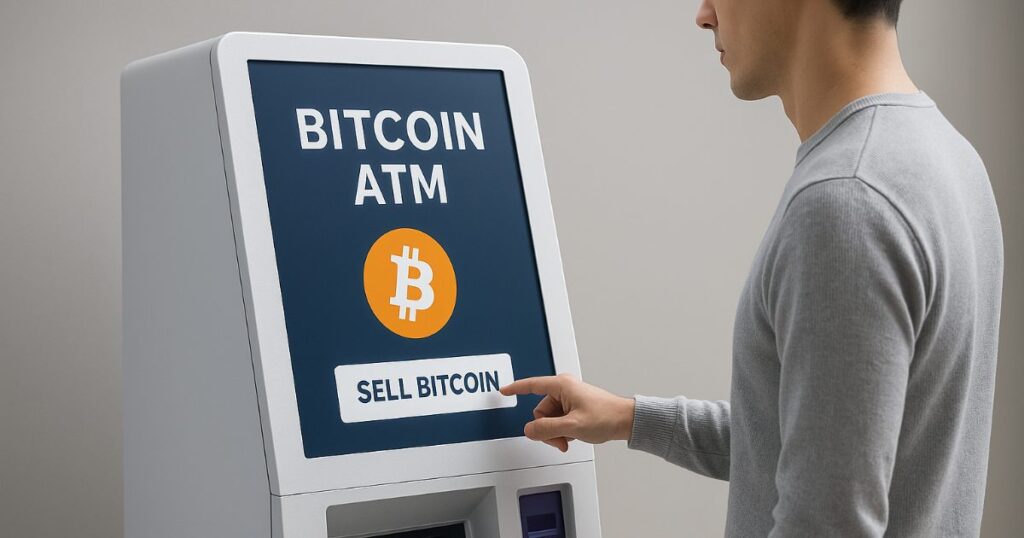


Disposing of Bitcoin at an ATM generally creates a taxable event that may result in capital gains or losses, which should be reported on Form 8949 when required. The IRS classifies cryptocurrency as property, meaning most sales trigger taxable events that must be reported on your tax return.
Using a Bitcoin ATM seems straightforward, but the tax implications can catch many people off guard. The IRS doesn’t treat cryptocurrency transactions differently just because they occur at an ATM rather than online. Every time you sell Bitcoin at an ATM, you create a taxable event that requires proper documentation and reporting.
Understanding these tax obligations protects you from penalties and keeps you compliant with federal law. This guide explains exactly what you need to report, how to calculate your tax liability, and what records to keep for Bitcoin ATM transactions.
When Bitcoin ATM Transactions Trigger Taxes
Buying Bitcoin through an ATM is not immediately taxable. When you purchase Bitcoin, you’re simply acquiring an asset. The transaction creates a cost basis for future tax calculations, but no taxable event occurs until you sell or use the cryptocurrency.
Selling Bitcoin at an ATM generally triggers capital gains tax. You must calculate the difference between your purchase price (cost basis) and the sale price. The resulting gain or loss should be reported on your tax return when required, even for small transactions.
The tax rate depends on how long you held the Bitcoin. If you owned it for one year or less, any profit is taxed as short-term capital gains at your ordinary income tax rate (10% to 37%). If you held it for more than one year, you qualify for long-term capital gains rates of 0%, 15%, or 20%.
Using Bitcoin to make purchases also creates taxable events. If you used Bitcoin acquired from an ATM to buy goods or services, you must calculate the capital gain or loss based on the Bitcoin’s value at purchase time versus your original cost basis.
Calculating Your Tax Liability
Your cost basis includes both the Bitcoin purchase price and any transaction fees paid to acquire it. ATM operators commonly charge notable fees (rates vary widely). Acquisition fees are generally treated as part of your cost basis, while selling fees reduce proceeds, though treatment can depend on the fee type and documentation.
Understanding Bitcoin ATM transaction fees and how they affect your cost basis calculations is essential for accurate tax reporting.
Here’s a basic calculation example:
| Transaction | Amount | Details |
|---|---|---|
| Purchase | $1,000 | Bitcoin + $80 ATM fee |
| Cost Basis | $1,080 | Total investment |
| Sale Price | $1,400 | Bitcoin’s value when sold |
| Sale Fees | $70 | ATM selling fee |
| Net Proceeds | $1,330 | Sale price minus fees |
| Taxable Gain | $250 | $1,330 – $1,080 cost basis |
Beginning in 2025, the IRS published new guidance (Revenue Procedure RP-24-28) that provides a safe harbor for making reasonable allocations of unused basis to particular wallets or accounts. This modifies how taxpayers may allocate basis, but doesn’t simply eliminate all alternative methods. You must now track cost basis separately for each wallet or account where you hold Bitcoin.
You can choose between the First In, First Out (FIFO) method and the specific identification method. FIFO assumes you sell your oldest Bitcoin first, while specific identification lets you choose which Bitcoin you’re selling to minimize tax liability. Taxpayers should read RP-24-28 and consider professional advice before making irrevocable elections.
Required Forms and Reporting
Taxpayers are responsible for reporting taxable dispositions even if they don’t receive tax documents from the ATM operator. Most sales should be reported using specific forms.
Form 8949 requires details about each Bitcoin sale:
- Date you acquired the Bitcoin
- Date you sold the Bitcoin
- Sale proceeds (amount received minus selling fees)
- Cost basis (purchase price plus acquisition fees)
- Gain or loss calculation
Schedule D (Form 1040) summarizes your total capital gains and losses. The net result flows to your primary tax return and determines your capital gains tax liability.
IRS Form 1099-DA is being implemented in phases: for transactions in 2025, brokers are required to report gross proceeds on Form 1099-DA. Reporting of cost-basis and gain-loss information will be phased in later, subject to IRS definitions of covered assets. However, many ATM operators historically haven’t issued 1099-type forms, and taxpayers shouldn’t rely on receiving one.
For comprehensive guidance on Bitcoin tax reporting requirements, including additional scenarios and IRS updates, understanding the broader tax landscape helps ensure complete compliance.
Record-Keeping Requirements
Keep all ATM receipts and related documentation (digital and physical). The IRS’s usual statute of limitations for assessing tax is generally 3 years from the date of filing (6 years if you omit more than 25% of your gross income). Retaining records for at least 3-7 years is reasonable, with longer retention for complex transactions.
Essential records include:
- ATM receipts showing transaction date, amount, and fees
- Wallet addresses where Bitcoin was sent or received
- Purchase confirmations from ATM operators
- Bank statements showing cash used for purchases
- Exchange rates at transaction times
Consider using cryptocurrency tax software such as Koinly, CoinTracker, or TaxBit to track transactions and calculate gains and losses automatically. These platforms can import data from many Bitcoin ATM operators, reducing manual work while ensuring accuracy.
The IRS has significantly increased cryptocurrency enforcement, using blockchain analysis to trace transactions. In some cases, law enforcement, blockchain analysis, ATM operator KYC data, or banking records can link transactions to individuals. However, traceability depends on the transaction flow and the presence of identifying data.
Special Situations and Compliance Issues
Business versus investment classification affects taxation. Most individual Bitcoin ATM users are classified as investors, with transactions treated as capital gains. However, frequent buying and selling might classify you as a dealer, subjecting gains to ordinary income tax rates.
Foreign reporting requirements may apply. If your foreign financial accounts have an aggregate value of $10,000 or more, you may need to file an FBAR (Form FinCEN 114). Bitcoin held domestically through U.S. ATMs typically doesn’t trigger these requirements unless it’s transferred to a foreign exchange.
Recent enhanced Know Your Customer (KYC) requirements at Bitcoin ATMs create clearer audit trails that actually benefit compliant taxpayers by providing better documentation.
Common Tax Mistakes to Avoid
Critical errors to prevent:
- Failing to track cost basis properly – The IRS may assume zero cost basis, taxing your entire sale as gain
- Ignoring small transactions – Even small sales may create taxable gains requiring reporting
- Not reporting Bitcoin used for purchases – Each use creates a taxable event
- Assuming ATM operators report everything – Personal record-keeping remains essential
- Using outdated tax methods – Stay current with changing regulations like RP-24-28
Professional tax assistance becomes valuable when you have multiple transactions or complex investment strategies.
FAQ
Do I need to report Bitcoin ATM purchases to the IRS?
No, buying Bitcoin isn’t immediately taxable. However, maintain purchase records for future tax calculations when you sell.
What if I only made small Bitcoin ATM transactions?
Even small dispositions may result in taxable gains that must be reported when required. Small transactions can add up to significant tax liabilities.
Can I avoid taxes by using cash at Bitcoin ATMs?
No, the payment method doesn’t change tax obligations. Selling Bitcoin creates a taxable event that should be reported.
What happens if I lose my Bitcoin ATM receipt?
Contact the ATM operator for transaction records, check email confirmations, and review bank statements for supporting documentation. Retain receipts and verify with a tax preparer.
Do Bitcoin ATM fees affect my taxes?
Yes, acquisition fees are generally treated as part of your cost basis, while selling fees reduce proceeds, both potentially affecting taxable gains.
Key Takeaways
- Most Bitcoin sales at ATMs trigger taxable events that must be reported when required, regardless of transaction size.
- Maintain detailed records, including receipts and confirmations, for 3-7 years to support your tax positions.
- Track cost basis including acquisition fees and subtract selling fees to determine accurate taxable gains, following current IRS guidance.
- New reporting requirements starting in 2025 will provide better documentation, but don’t eliminate personal record-keeping needs.
- Consider professional tax advice for complex transactions or when making elections under new IRS procedures.
Ready to use Bitcoin ATMs with confidence? Understanding your tax obligations protects you from costly surprises and ensures compliance with IRS requirements. Find a Cash2Bitcoin ATM near you for secure, compliant cryptocurrency transactions.

