Key Takeaway:
Reported losses involving Bitcoin ATMs topped $65 million in the first six months of 2024, with scammers using fake emergencies to direct victims to deposit cash into cryptocurrency machines. Always verify any urgent requests independently and remember that no legitimate government agency or business will ever ask you to pay through a Bitcoin ATM.
Bitcoin ATM fraud has exploded into a consumer protection crisis. Reported losses involving Bitcoin ATMs topped $65 million in the first six months of 2024, and estimates suggest the full-year total may be much higher. This represents a steep increase compared to prior years — for example, losses rose nearly tenfold from 2020 to 2023.
Understanding how these scams work and implementing proper safety measures is essential for anyone using cryptocurrency kiosks. This guide will show you how to spot scams, protect yourself during transactions, and safely use Bitcoin ATMs.
How Bitcoin ATM Scams Work
Bitcoin ATM scams follow a predictable pattern that exploits urgency, fear, and trust. The typical scam unfolds in four stages that every Bitcoin ATM user should recognize.
Initial Contact and Impersonation sets the stage for fraud. Scammers reach out through phone calls, text messages, emails, or social media. They impersonate trusted entities like government agents from the IRS or Social Security Administration, law enforcement officers, bank security personnel, or tech support representatives from Microsoft, Apple, or Google. Sometimes they even pretend to be family members in distress.
Creating Urgency and Fear forms the heart of their strategy. Fraudsters fabricate emergencies designed to alarm victims and pressure them into immediate action. They might claim your bank account has been compromised, warn of arrest warrants for unpaid taxes or missed jury duty, allege involvement in money laundering or drug smuggling, or report suspicious activity requiring immediate protective measures.
Directing to Bitcoin ATMs comes next. Once victims are sufficiently alarmed, scammers direct them to withdraw cash from their bank accounts and deposit it into a specific Bitcoin ATM. They often stay on the phone throughout the process, coaching victims to ignore warning messages displayed on the machines. They provide QR codes that link directly to the scammer’s cryptocurrency wallet.
The Transaction and Disappearance complete the fraud. After victims scan the QR code and complete the transaction, the cash is instantly converted to cryptocurrency and sent to the scammer’s wallet. The scammers then disappear, making the transaction virtually impossible to reverse or trace.
Who Scammers Target Most
Specific demographics face disproportionate risk from Bitcoin ATM scams. According to FTC data, older adults are disproportionately targeted in Bitcoin ATM-related fraud. People aged 60 and over are more than three times as likely as younger adults to report losses involving Bitcoin ATMs. More than two of every three dollars lost to fraud through these machines comes from older adults.
The statistics tell a sobering story. In 2023, the FBI’s Internet Crime Complaint Center received nearly 2,700 crypto ATM fraud complaints from individuals aged 60 and older. This number exceeded all other age groups combined. The median loss reported by victims in the first half of 2024 was $10,000, with many individuals losing their entire retirement savings, tax refunds, or life savings. Reported figures likely understate actual losses, as many scams go unreported, according to the FTC.
Romance Scams and “Pig Butchering” represent a particularly insidious variant. These long-term frauds combine investment schemes with emotional manipulation. Scammers create fake online identities on dating apps or social media, spending weeks or months building relationships and trust with victims. They then gradually introduce cryptocurrency investment opportunities through fraudulent platforms.
The term “pig butchering” describes the method scammers use. They first “fatten up” victims by gaining their trust, then “slaughter” them financially by convincing them to invest increasing amounts through Bitcoin ATMs or exchanges. Broader crypto investment scams (not only Bitcoin ATM fraud) cost consumers $1.179 billion in 2023, with TRM Labs estimating at least $2 billion was stolen through this method in 2024.
Warning Signs That Always Indicate Scams
Certain red flags should immediately alert you to potential fraud. These warning signs always indicate scams when someone contacts you about Bitcoin ATMs.
Absolute Warning Signs that guarantee you’re dealing with a scammer include:
- Payment demands through Bitcoin ATMs — Anyone directing you to use a Bitcoin ATM to pay bills, fines, taxes, or government fees
- Government Bitcoin accounts — Claims of government Bitcoin accounts, digital wallets, or “Bitcoin federal safety lockers”
- Arrest threats — Demands for immediate payment to avoid arrest, service cutoffs, or deportation
- Emergency cash withdrawals — Requests to withdraw cash in response to unexpected calls or messages
- QR codes from strangers — Anyone providing QR codes to “help” you secure or protect your money
Additional Red Flags that should raise serious concerns include unsolicited contact claiming suspicious account activity, pressure to act immediately without time to verify information, instructions to keep transactions secret from family or friends, romantic interests you’ve never met asking about investments, and investment opportunities promising guaranteed high returns.
These tactics are part of broader cryptocurrency scams that target victims across multiple platforms. Remember this fundamental rule: No legitimate government agency, business, bank, or law enforcement entity will ever ask you to pay via Bitcoin ATM or demand cryptocurrency for any reason.
Essential Safety Tips Before Using Bitcoin ATMs
Taking proper precautions before approaching a Bitcoin ATM can protect you from scams and security risks.
Verify the Operator first. Choose Bitcoin ATMs operated by reputable, licensed companies with clear branding, visible contact information, and compliance notices displayed on the machine. Major operators include Bitcoin Depot, CoinFlip, RockItCoin, and Cash2Bitcoin. These companies follow strict regulatory requirements and maintain proper security measures.
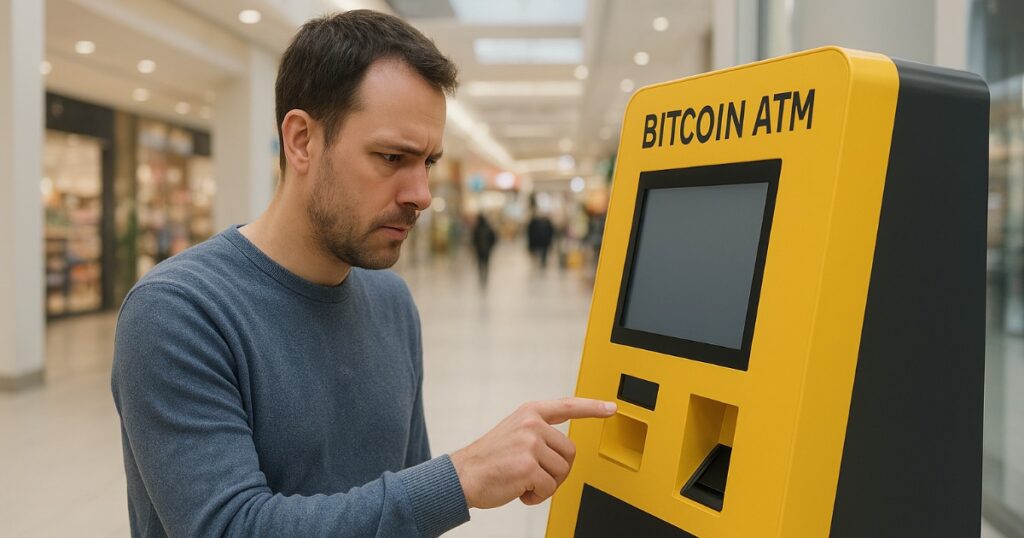
Check the Location carefully. Use machines in well-lit, high-traffic public areas with security cameras, such as shopping malls, grocery stores, or gas stations. Avoid isolated or poorly maintained locations where you might be vulnerable to theft or where machines are not properly serviced.
Inspect for tampering before starting any transaction. Examine the ATM for unusual attachments, loose components, damage, or stickers covering QR codes. These could be signs of skimming devices or other tampering designed to steal your information or funds.
Understand Transaction Limits that protect consumers. Many states now restrict daily transactions to $1,000-$2,000 for new customers and $5,000-$10,500 for existing customers, though this varies by state and operator — always check local regulations. Requests to exceed these amounts through multiple transactions should raise immediate suspicion.
Safe Transaction Practices
Following proper procedures during Bitcoin ATM transactions protects your funds and personal information.
Never Ignore Warning Screens that Bitcoin ATMs display. Legitimate operators show multiple fraud warning screens before transactions, sometimes as many as six warnings about scams. These screens remind users that all transactions are final and irreversible. Take time to read these warnings carefully.
Verify Your Wallet Address before confirming any transaction. Double-check that the wallet address displayed on screen matches your intended recipient. Cryptocurrency transactions cannot be reversed, so any mistake means permanent loss of your funds.
Avoid Public WiFi networks when completing transactions. Never use a coffee shop, airport, or other public WiFi for Bitcoin ATM operations. Use your home WiFi or mobile data to prevent potential interception of your transaction details.
Shield Your Entry from prying eyes. Be cautious of anyone watching you during transactions and shield your PIN or verification code entry from view. Criminals sometimes work in teams, with one person distracting you while another observes your security information.
What to Do If You’ve Been Scammed
If you suspect you’ve fallen victim to a Bitcoin ATM scam, taking immediate action can help authorities track the criminals and potentially prevent others from being victimized.
Report immediately to multiple agencies. Contact the FBI’s Internet Crime Complaint Center at IC3.gov, file a complaint with the Federal Trade Commission at ReportFraud.ftc.gov, and notify your local police department. Also, report the incident to the Bitcoin ATM operator if you can identify them.
Document Everything related to the scam. Save all communications from the scammer, including phone numbers, email addresses, and messages. Take photos of any QR codes provided and keep transaction receipts from the Bitcoin ATM. Record the exact location and time of your transaction.
Understand Recovery Limitations, but explore available options. Cryptocurrency transactions are generally irreversible, making fund recovery extremely difficult. Some states, like Rhode Island, have implemented 90-day fraud refund provisions, and federal legislation is being considered to require refunds for fraud victims who report within 30 days.
Seek Support for the emotional impact. Being scammed can be traumatic and embarrassing. Contact the AARP Fraud Watch Network Helpline at 877-908-3360 or the Better Business Bureau’s Scam Tracker for support and resources.
Frequently Asked Questions
Can the government or police ever ask me to pay through a Bitcoin ATM?
No, absolutely never. No legitimate government agency, law enforcement entity, or official organization will ever request payment through Bitcoin ATMs. This is always a scam without exception.
How can I tell if a Bitcoin ATM is legitimate?
Look for clear branding from reputable operators like Cash2Bitcoin, Bitcoin Depot, or CoinFlip. The machine should display proper licensing information and contact details and be located in a well-lit, high-traffic area with security cameras.
What should I do if someone stays on the phone coaching me through a Bitcoin ATM transaction?
Hang up immediately. Legitimate organizations never provide phone coaching for Bitcoin ATM transactions. This classic scam tactic prevents you from thinking clearly or seeking help.
Are there transaction limits that protect consumers?
Yes, most states now enforce daily limits ranging from $1,000 to $2,000 for new customers and up to $10,500 for existing customers with enhanced verification. Requests to exceed these limits are suspicious.
Can I reverse a Bitcoin ATM transaction if I realize it’s a scam?
Unfortunately, cryptocurrency transactions are irreversible by design. Once you complete the transaction, the funds are permanently transferred to the recipient’s wallet. This is why prevention is so critical.
Should I trust investment advice from someone I met online?
Be highly cautious about investment opportunities presented by people you’ve only met online, especially on dating apps or social media. “Pig butchering” scams often begin this way, with scammers building trust over weeks or months before introducing fraudulent investment schemes.
Key Takeaways
- Recognize scam patterns — Bitcoin ATM scams typically involve impersonating trusted authorities who create fake emergencies requiring immediate cryptocurrency payments.
- Remember the golden rule — No legitimate government agency, business, or law enforcement entity will ever ask you to pay through Bitcoin ATMs
- Know who’s at risk — Older adults face the highest risk, with people over 60 representing two-thirds of all Bitcoin ATM fraud losses
- Verify independently — Always verify urgent payment requests independently by contacting organizations directly using official phone numbers.
- Choose safe locations — Use Bitcoin ATMs from reputable operators in well-lit, high-traffic locations and never ignore fraud warning screens.
Ready to use Bitcoin ATMs safely? Find verified Cash2Bitcoin locations near you with proper security measures and regulatory compliance. Our network prioritizes customer safety with multiple fraud warnings and transaction limits designed to protect you.

